
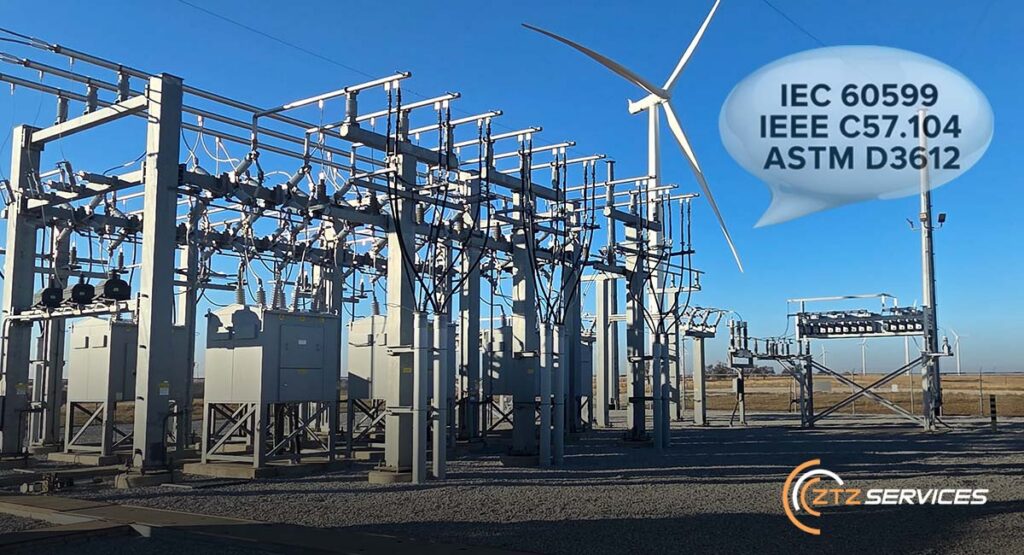
Within power asset management, Dissolved Gas Analysis (DGA) of transformer oil serves as an indispensable diagnostic tool. Combined with partial discharge and bushing monitoring, it is the closest we get to listening to the internal health of these vital assets. However, merely conducting DGA isn’t enough; the real power lies in interpreting results accurately and consistently, which hinges entirely on adhering to established international standards.
Many engineers are familiar with DGA interpretation methods, such as the ratio method and the Duval triangle, but a deeper understanding of the evolving standards themselves—and their direct impact on your diagnostic confidence—is often overlooked.
These standards aren’t static rulebooks; they are living documents that evolve with new technologies, materials, and operational challenges.
Beyond the Basics: The Evolving Landscape of DGA Standards
While foundational standards like IEC 60599 (Interpretation of the data), IEEE C57.104 (Guide for Interpretation), and ASTM D3612 (Analysis of gases) provide the bedrock, the nuances and recent adaptations are where true diagnostic excellence emerges.
Here’s what’s critical to know:
The Dynamic Nature of Interpretation Guides
Standards are continuously refined to address new insulating fluids (e.g., natural and synthetic esters), different transformer designs, and the demands of modern grids. For instance, the diagnostic boundaries for faults might shift slightly based on the fluid type, demanding a nuanced approach that older interpretations might miss.
Did you know that recent discussions within standards bodies emphasize the need for fluid-specific interpretation matrices? Relying solely on mineral oil-based charts for ester fluids can lead to misdiagnosis, potentially delaying critical interventions or causing unnecessary ones. Understanding these distinctions, now increasingly integrated into updated guides, is paramount.
The Unsung Hero Sampling Protocols
Even the most sophisticated DGA interpretation is worthless if the oil sample itself is compromised. Standards like IEC 60475 provide meticulous guidance on sampling techniques, crucial for obtaining a representative sample.
A common pitfall is underestimating the impact of sampling technique on gas concentrations, especially for lower molecular weight gases like hydrogen. Small air ingress during sampling can significantly skew results, leading to false positives or masking real issues.
Recent guidance updates often stress the importance of minimizing exposure time and using specialized sampling kits to maintain sample integrity, ensuring your DGA data is truly compliant and actionable. Connecting a DGA system directly to the drain valve helps prevent compromise. We have found that customers often stop using third party lab sample testing once they have a permanent connection in place, as it removes both the risk of sample compromise and the complexity of manual sampling.
Focus on Rate of Change, Not Just Absolute Values
While absolute gas levels are important, modern DGA standards increasingly emphasize the rate of gas generation as a primary indicator of impending issues. A transformer might operate safely with higher absolute gas levels if they are stable, but a rapid increase from even low levels can signal an urgent problem.
Standards now provide clearer guidelines and thresholds for assessing the acceleration of gas generation, moving beyond single-point analysis. This shifts the focus from “what is the level?” to “how fast is it changing?”, enabling more proactive and predictive maintenance strategies.
By staying current with the evolving DGA standards and understanding their practical implications, you empower your team to make more informed, timely, and cost-effective decisions regarding transformer maintenance. This leads to enhanced asset reliability, prolonged operational life, and significantly reduced risk of unplanned outages, ultimately safeguarding your grid’s integrity.
ZTZ Services helps you navigate these complexities, ensuring your DGA data evaluation practices are not just compliant, but cutting-edge. Read more about our Hydrocal Dissolved Gas Analysis Online Monitor
Citations: IEC Technical Committee 10 (Fluids for electrotechnical applications). https://www.iec.ch/system/files/2024-05/focus_on_iec_tc_10_1.pdf


